


In the CIS countries creativity and art are a living process in which rich national traditions, the Soviet cultural heritage, and modern international trends intertwine. The Commonwealth countries actively interact, implementing joint projects, festivals, and programs that strengthen cultural ties and facilitate the exchange of experience.
The key documents in this area are the Agreement on Cooperation in the Field of Culture (1992), which laid the foundation for developing exchanges in a wide range of areas — music, theatre, visual arts, variety show and circus, cinema, libraries and museums — as well as the Agreement on Humanitarian Cooperation (2005) and the Concept for Cooperation among the CIS States in the Field of Culture (2011)
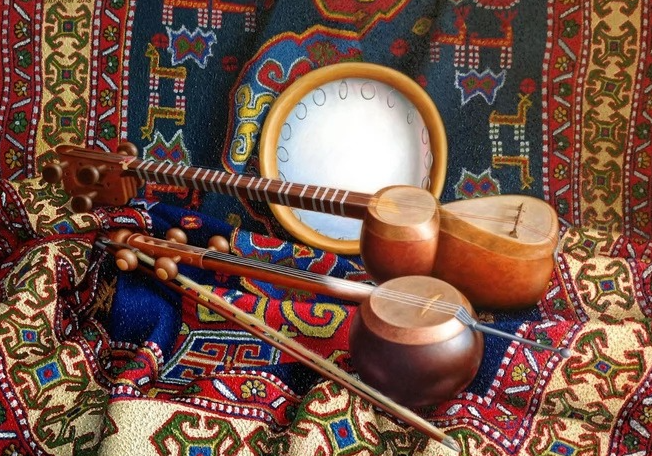
The CIS countries carefully preserve the rich heritage of traditional crafts and folklore. The museum collections feature unique examples, such as the Untsukul metalwork on wood from Dagestan, fine-patterned painting and wood carving in the “pargori” style from Uzbekistan, as well as items made by the peoples of the Far East and the Far North.
In addition to traditional arts, modern formats are also developing, combining respect for traditions with the search for new forms.
One of the most striking trends is the growing interest in digital art and tokenization. Artists create digital paintings, animations, and 3D works, and then release them as NFTs — non‑fungible tokens that secure ownership rights to a unique digital object. Works that combine different fields are becoming increasingly common: art and design, art and technology, art and social sciences. For example, projects where 3D printing is combined with the landscape design, or bioengineering intersects with visual art.
The connection between creativity and art and the economy is realized through the development of creative industries — a sector where the economic output is produced on the basis of intellectual labor and cultural capital. This leads to the creation of jobs, an increase in revenues from the operation of cultural infrastructure, and, ultimately, an increase in the contribution to the national GDP. At the same time, creative industries help to develop tourism, territories, and related industries, such as cinema, theater, museums, and others.
The CIS Creative Industries Association is intended to stimulate the development of creativity and art in the CIS countries. This initiative was put forward in 2025 by the President of Kazakhstan.
Currently, experts from the CIS countries are coordinating a draft document to regulate the work of the Association. It will define priority areas of cooperation in the field of creative industries, facilitate the exchange of experience and best practices, coordinate the interaction of organizations involved in this field, support their forums, festivals, exhibitions, competitions, creative seminars, acceleration and educational programs, and promote the interaction between creative clusters, educational organizations, development institutions, and the expert community.
Overall, activities in the fields of creativity, art, and crafts will be aimed at developing and strengthening humanitarian cooperation, fostering stable professional and intersectoral ties, and creating conditions for the self realization and professional growth of young representatives of creative professions.